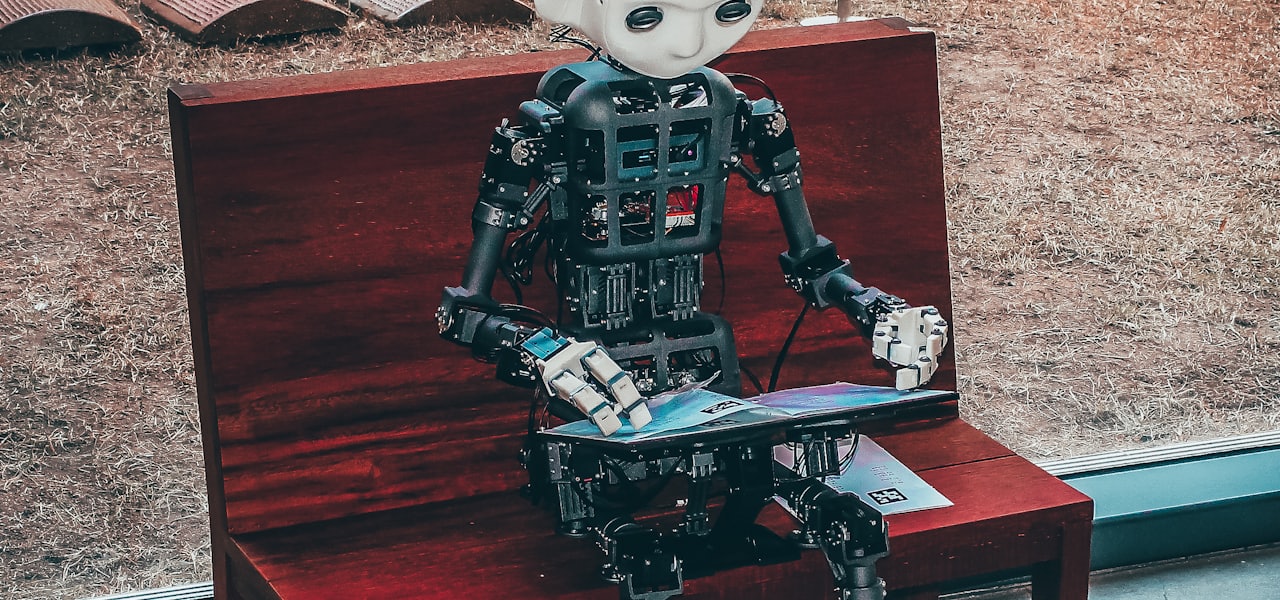
Self-management is the process by which computer systems manage their own operation without human intervention. Self-management technologies are expected to pervade the next generation of network management systems. The growing complexity of modern networked computer systems is a limiting factor in their expansion. The increasing heterogeneity of corporate computer systems, the inclusion of mobile computing devices, and the combination of different networking technologies like WLAN, cellular phone networks, and mobile ad hoc networks make the conventional, manual management difficult, time-consuming, and error-prone. More recently, self-management has been suggested as a solution to increasing complexity in cloud computing. An industrial initiative towards realizing self-management is the Autonomic Computing Initiative (ACI) started by IBM in 2001. The ACI defines the following four functional areas: Self-configuration Auto-configuration of components Self-healing Automatic discovery, and correction of faults; automatically applying all necessary actions to bring system back to normal operation Self-optimization Automatic monitoring and control of resources to ensure the optimal functioning with respect to the defined requirements Self-protection Proactive identification and protection from arbitrary attacks
CHAOS (chess)
CHAOS (Chess Heuristics and Other Stuff) is a chess playing program that was developed by programmers working at the RCA Systems Programming division in the late 1960s. It played competitively in computer chess competitions in the 1970s and 1980s. It differed from other programs of that era in its look-ahead philosophy, choosing to use chess knowledge to evaluate fewer positions and continuations as opposed to simple evaluations that relied on deep look-ahead to avoid bad moves. == Introduction == CHAOS was originally developed by Ira Ruben, Fred Swartz, Victor Berman, Joe Winograd and William Toikka while working at RCA in Cinnaminson, NJ. Its name is an acronym for 'Chess Heuristics and Other Stuff.' Program development moved to the Computing Center of the University of Michigan when Swartz changed jobs, and Mike Alexander joined the development group. Swartz, Alexander and Berman were continuously group members from that point onward in CHAOS' evolution, as others of the original authors left and new members contributed episodically. Chess Senior Master Jack O'Keefe contributed to CHAOS' development from about 1980 onwards. CHAOS was written in Fortran, except for low-level board representation manipulations written in assembly language or C. Due to this portability, it ran on RCA, Univac and IBM-compatible mainframes in its lifetime. CHAOS heralds from the mainframe computing era when only machines of that capacity were able to play at a high level. Consequently, development and testing could only take place at off-peak times for production use of the machine. In a competition, CHAOS had to run on a dedicated mainframe with a telephone link to the match venue. In its later years, CHAOS ran on computers on the machine assembly floor of Amdahl Corporation on MTS. == Background == === Chess and artificial intelligence === Mathematicians Claude Shannon and Alan Turing, working separately, were the first to view playing chess as a challenge to machines. Working for AT&T / Bell Labs with its access to telephone switching equipment, Shannon built a relay-based machine that learned how to work its way through a two-dimensional, 5x5 cell maze in 1949. Shannon viewed this as an analogue of the way that organisms learn things about their natural environment. There is a random element to searching it, a memory element to benefit from the search outcome, and a reward element that reinforces learning when the global outcome is favorable to the organism. Soon afterward, Shannon wrote a mathematical analysis of the game of chess, published in 1950. Like with the maze, he broke down game play into the necessary elements for reinforcement learning. Associated with each board configuration a move will be made from, there is a numerical score. To decide what move to make, a player wants to maximize their own position's score after the move and to minimize their opponent's score (a minimax view). Since there are about 32 possible moves at each of the early stages of the game, and about 40 moves and responses in each game, then there are about 32 80 {\displaystyle 32^{80}} or about 10 120 {\displaystyle 10^{120}} possible games - an impossibly large set to evaluate completely. Therefore, there must be a way to limit the number of moves to look ahead for to find the best one. Reducing the game to these few key elements provided a way to think about human intelligence in general. Shannon became part of a wider group using computing machines to mimic aspects of human intelligence that grew into the general idea of artificial intelligence. (Other members of this group were John McCarthy, Herbert Simon, Allen Newell, Alan Kotok, Alex Bernstein and Richard Greenblatt.) The paradigm that evolved was that there was a quantification of the position on the board into a score, an evaluation method to find favorable outcomes (minimax, later alpha-beta pruning), and a strategy to manage the combinatorial explosion of the look-ahead possibilities. By the early 1960s, there were computer programs that played chess at a rudimentary level. They used very simple evaluation functions for each position and tried to search as far forward as was practical given the time constraints and available compute power. Naturally, programmers optimized their code to use the available computing resources. This led to a major philosophical divide among chess programs: those that tried to evaluate as many positions as possible, and those that tried to evaluate the most promising move sequences as deeply as possible. CHAOS was firmly in the camp believing only the most promising moves should be evaluated in depth. Said Swartz, "The 'brute force people' ... look at every (possible move) no matter what garbage it is. Most moves are just terrible, terrible moves, and most computing time is being spent on pure garbage." The program spent more time evaluating each board position in the expectation that it would find the most promising lines of play to explore in depth. In 1983, the then-fastest chess program (Belle) evaluated 110,000 positions per second, and typical programs 1000–50,000 per second, whereas CHAOS evaluated about 50-100 per second. === Machine learning and strategies to manage search === From about 1949 onward, Arthur Samuel began work for IBM on machine learning, culminating in a checkers-playing program in 1952 and publications on the topic. Concurrently, Christopher Strachey created Checkers, a program to play the board game of checkers in 1951, but it had no capacity to learn from its play. Checkers was chosen by both authors because it was simpler than chess yet contained the basic characteristics of an intellectual activity, and, in Samuel's view, was a test-bed in which heuristic procedures and learning processes could be evaluated quickly. Checker playing programs introduced the notion of the game tree and evaluating play to various depths to choose the best move. The complexity of chess, however, promoted it to the status of an analogue for human intelligence, and it attracted computer scientists' attention, who referred to it as research into artificial intelligence (AI). Like checkers, it required a numerical assessment of each arrangement of chess pieces on a board. It also required looking ahead to future moves to decide how to play the present position. Due to the enormous number of possible moves, there had to be a way to confine the look-ahead search to the most promising lines of play. From these factors, the notion of minimax score evaluation developed and, later, alpha-beta tree pruning to abandon looking at positions worse than any that have already been examined. === Chess search strategies === The AI community viewed artificial intelligence as comprising two parts: a way to symbolically quantify the knowledge in hand (a chess board position), and a set of heuristics to limit look-ahead to the consequences of a move. The early chess playing programs attempted to look forward as far as possible, perhaps to 3 moves ahead by each player, and to choose the best outcome. This led to the horizon effect, whereby a key move 4 or more moves ahead would be unexamined and therefore missed. Consequently, the programs were quite weak and heuristics to manage the search became important in their development. CHAOS used a selective search strategy with iterative widening. As chess programs evolved, they incorporated books of opening lines of play from historic sources. Nowadays, book moves are catalogued in machine-readable form, but originally programmers had to type them in. CHAOS had an extensive book for its time of around 10,000 moves that O'Keefe helped to develop. A problem with play from an opening book is the behavior of the program when the play leaves the book: the positional advantage may be so subtle that the evaluation scheme may be unable to understand it, leading to very wide and shallow searches to establish a line of play. The horizon effect again plagues move selection after leaving the book. CHAOS mitigated these problems by only using book lines that it could understand, and by relying on cached analyses of continuations out of the book made while the opponent's clock was running. == Game Play History == CHAOS played in twelve ACM computer chess tournaments and four World Computer Chess Championships (WCCC). Its debut was the ACM computer chess tournament in 1973, taking 2nd place. In 1974, it again won 2nd place in the WCCC, defeating the tournament favorite Chess 4.0 but losing to Kaissa. CHAOS was close to winning the 1980 WCCC, but lost to Belle in a playoff. The 1985 ACM computer chess tournament was CHAOS' last competition. One of CHAOS' notable victories was over Chess 4.0 at the 1974 WCCC tournament. Chess 4.0 was unbeaten by any other program up until then. Playing as white, CHAOS made a knight sacrifice (16 Nd4-e6!!) that traded material for open lines of attack and eventually won the game. CHAOS’ authors thought the move was due to a
Semi-automation
Semi-automation is a process or procedure that is performed by the combined activities of man and machine with both human and machine steps typically orchestrated by a centralized computer controller. Within manufacturing, production processes may be fully manual, semi-automated, or fully automated. In this case, semi-automation may vary in its degree of manual and automated steps. Semi-automated manufacturing processes are typically orchestrated by a computer controller which sends messages to the worker at the time in which he/she should perform a step. The controller typically waits for feedback that the human performed step has been completed via either a human-machine interface or via electronic sensors distributed within the process. Controllers within semi-automated processes may either directly control machinery or send signals to machinery distributed within the process. Centralized computer controllers within semi-automated processes orchestrate processes by instructing the worker, providing electronic communication and control to process equipment, tools, or machines, as well as perform data management to record and ensure that the process meets established process criteria. Many manufacturers choose not to fully automate a process, and instead implement semi-automation due to the complexity of the task, or the number of products produced is too low to justify the investment in full automation. Other processes may not be fully automated because it may reduce the flexibility to easily adapt the processes to reflect production needs.
Kernel-phase
Kernel-phases are observable quantities used in high resolution astronomical imaging used for superresolution image creation. It can be seen as a generalization of closure phases for redundant arrays. For this reason, when the wavefront quality requirement are met, it is an alternative to aperture masking interferometry that can be executed without a mask while retaining phase error rejection properties. The observables are computed through linear algebra from the Fourier transform of direct images. They can then be used for statistical testing, model fitting, or image reconstruction. == Prerequisites == In order to extract kernel-phases from an image, some requirements must be met: Images are nyquist-sampled (at least 2 pixels per resolution element ( λ D {\displaystyle {\frac {\lambda }{D}}} )) Images are taken in near monochromatic light Exposure time is shorter than the timescale of aberrations Strehl ratio is high (good adaptive optics) Linearity of the pixel response (i.e. no saturation) Deviations from these requirements are known to be acceptable, but lead to observational bias that should be corrected by the observation of calibrators. == Definition == The method relies on a discrete model of the instrument's pupil plane and the corresponding list of baselines to provide corresponding vectors φ {\displaystyle \varphi } of pupil plane errors and Φ {\displaystyle \Phi } of image plane Fourier Phases. When the wavefront error in the pupil plane is small enough (i.e. when the Strehl ratio of the imaging system is sufficiently high), the complex amplitude associated to the instrumental phase in one point of the pupil φ k {\displaystyle \varphi _{k}} , can be approximated by e i φ k ≈ 1 + i φ k {\displaystyle e^{i\varphi _{k}}\approx 1+{\mathit {i}}\varphi _{k}} . This permits the expression of the pupil-plane phase aberrations φ {\displaystyle \varphi } to the image plane Fourier phase as a linear transformation described by the matrix A {\displaystyle A} : Φ = Φ 0 + A ⋅ φ {\displaystyle \Phi =\Phi _{0}+A\cdot \varphi } Where Φ 0 {\displaystyle \Phi _{0}} is the theoretical Fourier phase vector of the object. In this formalism, singular value decomposition can be used to find a matrix K {\displaystyle K} satisfying K ⋅ A = 0 {\displaystyle K\cdot A=0} . The rows of K {\displaystyle K} constitute a basis of the kernel of A T {\displaystyle A^{T}} . K ⋅ Φ = K ⋅ Φ 0 + K ⋅ A ⋅ φ {\displaystyle K\cdot \Phi =K\cdot \Phi _{0}+{\cancel {K\cdot A\cdot \varphi }}} The vector K . Φ {\displaystyle K.\Phi } is called the kernel-phase vector of observables. This equation can be used for model-fitting as it represents the interpretation of a sub-space of the Fourier phase that is immune to the instrumental phase errors to the first order. == Applications == The technique was first used in the re-analysis of archival images from the Hubble Space Telescope where it enabled the discovery of a number of brown dwarf in close binary systems. The technique is used as an alternative to aperture masking interferometry, especially for fainter stars because it does not require the use of masks that typically block 90% of the light, and therefore allows higher throughput. It is also considered to be an alternative to coronagraphy for direct detection of exoplanets at very small separations (below 2 λ D {\displaystyle 2{\frac {\lambda }{D}}} ) where coronagraphs are limited by the wavefront errors of adaptive optics. The same framework can be used for wavefront sensing. In the case of an asymmetric aperture, a pseudo-inverse of A {\displaystyle A} can be used to reconstruct the wavefront errors directly from the image. A Python library called xara is available on GitHub and maintained by Frantz Martinache to facilitate the extraction and interpretation of kernel-phases. The KERNEL project, has received funding from the European Research Council to explore the potential of these observables for a number of use-cases, including direct detection of exoplanets, image reconstruction, and image plane wavefront sensing for adaptive optics.
OpenPipeline
openPipeline is an open-source plug-in for Autodesk Maya that is designed to assist in a Production Pipeline structure and Computer animation. == Development == Created in Maya Embedded Language, openPipeline was initiated at Eyebeam Atelier and further developed at Pratt Institute in the Digital Arts Lab. The initial release date was December 28, 2006. == Contributors == Rob O'Neill (Creator) Paris Mavroidis Meng-Han Ho
Application software
Application software is software that is intended for end-user use – not operating, administering or programming a computer. It includes programs such as word processors, web browsers, media players, and mobile applications used in daily tasks. An application (app, application program, software application) is any program that can be categorized as application software. Application is a subjective classification that is often used to differentiate from system and utility software. Application software represents the user-facing layer of computing systems, designed to translate complex system capabilities into task-oriented, goal-driven workflows. Unlike system software, which focuses on hardware orchestration and resource management, application software is centered on problem abstraction, user interaction, and domain-specific functionality. The abbreviation app became popular with the 2008 introduction of the iOS App Store, to refer to applications for mobile devices such as smartphones and tablets. Later, with the release of the Mac App Store in 2010 and the Windows Store in 2011, it began to be used to refer to end-user software in general, regardless of platform. Applications may be bundled with the computer and its system software or published separately. Applications may be proprietary or open-source. == Terminology == === Meaning program and software === When used as an adjective, application can have a broader meaning than that described in this article. For example, concepts such as application programming interface (API), application server, application virtualization, application lifecycle management and portable application refer to programs and software in general. === Distinction between system and application software === The distinction between system and application software is subjective and has been the subject of controversy. For example, one of the key questions in the United States v. Microsoft Corp. antitrust trial was whether Microsoft's Internet Explorer web browser was part of its Windows operating system or a separate piece of application software. As another example, the GNU/Linux naming controversy is, in part, due to disagreement about the relationship between the Linux kernel and the operating systems built over this kernel. In some types of embedded systems, the application software and the operating system software may be indistinguishable by the user, as in the case of software used to control a VCR, DVD player, or microwave oven. The above definitions may exclude some applications that may exist on some computers in large organizations. For an alternative definition of an app: see Application Portfolio Management. === Killer application === A killer application (killer app, coined in the late 1980s) is an application that is so popular that it causes demand for its host platform to increase. For example, VisiCalc was the first modern spreadsheet software for the Apple II and helped sell the then-new personal computers into offices. For the BlackBerry, it was its email software. === Software suite === As software suite consists of multiple applications bundled together. They usually have related functions, features, and user interfaces, and may be able to interact with each other, e.g. open each other's files. Business applications often come in suites, e.g. Microsoft Office, LibreOffice and iWork, which bundle together a word processor, a spreadsheet, etc.; but suites exist for other purposes, e.g. graphics or music. == Ways to classify == As there so many applications and since their attributes vary so dramatically, there are many different ways to classify them. === By legal aspects === Proprietary software is protected under an exclusive copyright, and a software license grants limited usage rights. Such applications may allow add-ons from third parties. Free and open-source software (FOSS) can be run, distributed, sold, and extended for any purpose. FOSS software released under a free license may be perpetual and also royalty-free. Perhaps, the owner, the holder or third-party enforcer of any right (copyright, trademark, patent, or ius in re aliena) are entitled to add exceptions, limitations, time decays or expiring dates to the license terms of use. Public-domain software is a type of FOSS that is royalty-free and can be run, distributed, modified, reversed, republished, or created in derivative works without any copyright attribution and therefore revocation. It can even be sold, but without transferring the public domain property to other single subjects. Public-domain software can be released under a (un)licensing legal statement, which enforces those terms and conditions for an indefinite duration (for a lifetime, or forever). === By platform === An application can be categorized by the host platform on which it runs. Notable platforms include operating system (native), web browser, cloud computing and mobile. For example a web application runs in a web browser whereas a more traditional, native application runs in the environment of a computer's operating system. There has been a contentious debate regarding web applications replacing native applications for many purposes, especially on mobile devices such as smartphones and tablets. Web apps have indeed greatly increased in popularity for some uses, but the advantages of applications make them unlikely to disappear soon, if ever. Furthermore, the two can be complementary, and even integrated. === Horizontal vs. vertical === Application software can be seen as either horizontal or vertical. Horizontal applications are more popular and widespread, because they are general purpose, for example word processors or databases. Vertical applications are niche products, designed for a particular type of industry or business, or department within an organization. Integrated suites of software will try to handle every specific aspect possible of, for example, manufacturing or banking worker, accounting, or customer service. === By purpose === There are many types of application software: Enterprise Addresses the needs of an entire organization's processes and data flows, across several departments, often in a large distributed environment. Examples include enterprise resource planning systems, customer relationship management (CRM) systems, data replication engines, and supply chain management software. Departmental Software is a sub-type of enterprise software with a focus on smaller organizations or groups within a large organization. (Examples include travel expense management and IT Helpdesk.) Enterprise infrastructure Provides common capabilities needed to support enterprise software systems. (Examples include databases, email servers, and systems for managing networks and security.) Application platform as a service (aPaaS) A cloud computing service that offers development and deployment environments for application services. Knowledge worker Lets users create and manage information, often for and individual media editors may aid in multiple information worker tasks. Content access Used primarily to access content without editing, but may include software that allows for content editing. Such software addresses the needs of individuals and groups to consume digital entertainment and published digital content. (Examples include media players, web browsers, and help browsers.) Educational Related to content access software, but has the content or features adapted for use by educators or students. For example, it may deliver evaluations (tests), track progress through material, or include collaborative capabilities. Simulation Simulates physical or abstract systems for either research, training, or entertainment purposes. Media development Generates print and electronic media for others to consume, most often in a commercial or educational setting. This includes graphic-art software, desktop publishing software, multimedia development software, HTML editors, digital-animation editors, digital audio and video composition, and many others. Engineering Used in developing hardware and software products. This includes computer-aided design (CAD), computer-aided engineering (CAE), computer language editing and compiling tools, integrated development environments, and application programmer interfaces. Entertainment Refers to video games, screen savers, programs to display motion pictures or play recorded music, and other forms of entertainment which can be experienced through the use of a computing device. == Taxonomy == This section is a taxonomy of kinds of applications. This organization is but one of many different ways to organize them. A kind is included in only one category even if it logically fits in multiple. === General-purpose === Calculator Spreadsheet Web browser Web mapping E-commerce Social media === Communication === Chat Email Presentation software Phone Messages Networking software Web conferencing === Documentation === Desktop
Pixel aspect ratio
A pixel aspect ratio (PAR) is a mathematical ratio that describes how the width of a pixel in a digital image compares to the height of that pixel. Most digital imaging systems display an image as a grid of tiny, square pixels. However, some imaging systems, especially those that must be compatible with standard-definition television motion pictures, display an image as a grid of rectangular pixels, in which the pixel width and height are different. Pixel aspect ratio describes this difference. Use of pixel aspect ratio mostly involves pictures pertaining to standard-definition television and some other exceptional cases. Most other imaging systems, including those that comply with SMPTE standards and practices, use square pixels. PAR is also known as sample aspect ratio and abbreviated SAR, though it can be confused with storage aspect ratio. == Introduction == The ratio of the width to the height of an image is known as the aspect ratio, or more precisely the display aspect ratio (DAR) – the aspect ratio of the image as displayed; for TV, DAR was traditionally 4:3 (a.k.a. fullscreen), with 16:9 (a.k.a. widescreen) now the standard for HDTV. In digital images, there is a distinction with the storage aspect ratio (SAR), which is the ratio of pixel dimensions. If an image is displayed with square pixels, then these ratios agree; if not, then non-square, "rectangular" pixels are used, and these ratios disagree. The aspect ratio of the pixels themselves is known as the pixel aspect ratio (PAR) – for square pixels this is 1:1 – and these are related by the identity: Rearranging (solving for PAR) yields: For example: A 640 × 480 VGA image has a SAR of 640/480 = 4:3, and if displayed on a 4:3 display (DAR = 4:3) has square pixels, hence a PAR of 1:1. By contrast, a 720 × 576 D-1 PAL image has a SAR of 720/576 = 5:4, but if displayed on a 4:3 display (DAR = 4:3) the PAR is 4/3 : 5/4 = 16:15 ≈ 1.066. This means that the pixels of the PAL picture must be "stretched" by this amount to fit in the 4:3 display. In analog images such as film there is no notion of pixel, nor notion of SAR or PAR, but in the digitization of analog images the resulting digital image has pixels, hence SAR (and accordingly PAR, if displayed at the same aspect ratio as the original). Non-square pixels arise often in early digital TV standards, related to digitalization of analog TV signals – whose vertical and "effective" horizontal resolutions differ and are thus best described by non-square pixels – and also in some digital video cameras and computer display modes, such as Color Graphics Adapter (CGA). Today they arise also in transcoding between resolutions with different SARs. Actual displays do not generally have non-square pixels, though digital sensors might; they are rather a mathematical abstraction used in resampling images to convert between resolutions. There are several complicating factors in understanding PAR, particularly as it pertains to digitization of analog video: First, analog video does not have pixels, but rather a raster scan, and thus has a well-defined vertical resolution (the lines of the raster), but not a well-defined horizontal resolution, since each line is an analog signal. However, by a standardized sampling rate, the effective horizontal resolution can be determined by the sampling theorem, as is done below. Second, due to overscan, some of the lines at the top and bottom of the raster are not visible, as are some of the possible image on the left and right – see Overscan: Analog to digital resolution issues. Also, the resolution may be rounded (DV NTSC uses 480 lines, rather than the 486 that are possible). Third, analog video signals are interlaced – each image (frame) is sent as two "fields", each with half the lines. Thus either the pixels are twice as tall as they would be without interlacing, or the image is deinterlaced. == Background == Video is presented as a sequential series of images called video frames. Historically, video frames were created and recorded in analog form. As digital display technology, digital broadcast technology, and digital video compression evolved separately, it resulted in video frame differences that must be addressed using pixel aspect ratio. Digital video frames are generally defined as a grid of pixels used to present each sequential image. The horizontal component is defined by pixels (or samples), and is known as a video line. The vertical component is defined by the number of lines, as in 480 lines. Standard-definition television standards and practices were developed as broadcast technologies and intended for terrestrial broadcasting, and were therefore not designed for digital video presentation. Such standards define an image as an array of well-defined horizontal "Lines", well-defined vertical "Line Duration" and a well-defined picture center. However, there is not a standard-definition television standard that properly defines image edges or explicitly demands a certain number of picture elements per line. Furthermore, analog video systems such as NTSC 480i and PAL 576i, instead of employing progressively displayed frames, employ fields or interlaced half-frames displayed in an interwoven manner to reduce flicker and double the image rate for smoother motion. === Analog-to-digital conversion === As a result of computers becoming powerful enough to serve as video editing tools, video digital-to-analog converters and analog-to-digital converters were made to overcome this incompatibility. To convert analog video lines into a series of square pixels, the industry adopted a default sampling rate at which luma values were extracted into pixels. The luma sampling rate for 480i pictures was 12+3⁄11 MHz and for 576i pictures was 14+3⁄4 MHz. The term pixel aspect ratio was first coined when ITU-R BT.601 (commonly known as Rec. 601) specified that standard-definition television pictures are made of lines of exactly 720 non-square pixels. ITU-R BT.601 did not define the exact pixel aspect ratio but did provide enough information to calculate the exact pixel aspect ratio based on industry practices: The standard luma sampling rate of precisely 13+1⁄2 MHz. Based on this information: The pixel aspect ratio for 480i would be 10:11 as: 12 3 11 ÷ 13 1 2 = 10 11 {\displaystyle 12{\tfrac {3}{11}}\div 13{\tfrac {1}{2}}={\tfrac {10}{11}}} The pixel aspect ratio for 576i would be 59:54 as: 14 3 4 ÷ 13 1 2 = 59 54 {\displaystyle 14{\tfrac {3}{4}}\div 13{\tfrac {1}{2}}={\tfrac {59}{54}}} SMPTE RP 187 further attempted to standardize the pixel aspect ratio values for 480i and 576i. It designated 177:160 for 480i or 1035:1132 for 576i. However, due to significant difference with practices in effect by industry and the computational load that they imposed upon the involved hardware, SMPTE RP 187 was simply ignored. SMPTE RP 187 information annex A.4 further suggested the use of 10:11 for 480i. As of this writing, ITU-R BT.601-6, which is the latest edition of ITU-R BT.601, still implies that the pixel aspect ratios mentioned above are correct. === Digital video processing === As stated above, ITU-R BT.601 specified that standard-definition television pictures are made of lines of 720 non-square pixels, sampled with a precisely specified sampling rate. A simple mathematical calculation reveals that a 704 pixel width would be enough to contain a 480i or 576i standard 4:3 picture: A 4:3 480-line picture, digitized with the Rec. 601-recommended sampling rate, would be 704 non-square pixels wide. x 480 × 10 11 = 4 3 ⇒ x = 480 × 11 × 4 10 × 3 = 704 {\displaystyle {\frac {x}{480}}\times {\frac {10}{11}}={\frac {4}{3}}\Rightarrow x={\frac {480\times 11\times 4}{10\times 3}}=704} A 4:3 576-line picture, digitized with the Rec. 601-recommended sampling rate, would be 702+54⁄59 non-square pixels wide. x 576 × 59 54 = 4 3 ⇒ x = 576 × 54 × 4 59 × 3 = 702 54 59 {\displaystyle {\frac {x}{576}}\times {\frac {59}{54}}={\frac {4}{3}}\Rightarrow x={\frac {576\times 54\times 4}{59\times 3}}=702{\tfrac {54}{59}}} Unfortunately, not all standard TV pictures are exactly 4:3: As mentioned earlier, in analog video, the center of a picture is well-defined but the edges of the picture are not standardized. As a result, some analog devices (mostly PAL devices but also some NTSC devices) generated motion pictures that were horizontally (slightly) wider. This also proportionately applies to anamorphic widescreen (16:9) pictures. Therefore, to maintain a safe margin of error, ITU-R BT.601 required sampling 16 more non-square pixels per line (8 more at each edge) to ensure saving all video data near the margins. This requirement, however, had implications for PAL motion pictures. PAL pixel aspect ratios for standard (4:3) and anamorphic wide screen (16:9), respectively 59:54 and 118:81, were awkward for digital image processing, especially for mixing PAL and NTSC video clips. Therefore, video editing products chose the almost equivalent value